

Grease buildup is one of the most common and most underestimated problems in restaurant kitchens. Even restaurants that clean daily can still accumulate dangerous levels of grease over time, especially in high-use commercial kitchens.
Routine cleaning plays an important role, but it is often not enough to prevent long-term grease accumulation. Health inspectors and fire marshals in San Diego frequently cite grease-related issues during inspections, even in kitchens that appear clean at first glance.
Understanding how grease builds up and why deeper cleaning is necessary can help restaurant owners protect their staff, equipment, and business.
How Grease Builds Up in Commercial Kitchens
Every time cooking equipment is used, grease particles are released into the air. These particles settle on surfaces throughout the kitchen, not just on cooking equipment.
Grease commonly accumulates on:
-
Behind ranges and fryers
-
Undersides of equipment
-
Hood vents and filters
-
Walls, ceilings, and light fixtures
-
Floors and floor drains
Because this buildup happens gradually, it is easy to miss during daily cleaning routines. Over time, grease hardens, attracts dirt, and becomes more difficult to remove.
Why Routine Cleaning Has Limitations
Routine cleaning focuses on visible surfaces and food-contact areas. While this is essential, it does not address grease in hard-to-reach or less obvious locations.
Limitations of routine cleaning include:
-
Time constraints during busy service hours
-
Inability to access equipment safely
-
Focus on immediate sanitation rather than buildup
-
Inconsistent cleaning between shifts
Even diligent staff may not have the tools or time required to remove embedded grease from vents, equipment interiors, or floor edges.
Grease Buildup Is a Serious Fire Risk
Grease accumulation significantly increases the risk of kitchen fires. When grease is allowed to build up on equipment or ventilation systems, it can ignite quickly under high heat.
Fire-related concerns inspectors look for include:
-
Grease-coated hood filters
-
Residue inside exhaust ducts
-
Grease pooling behind fryers
-
Slippery floors caused by grease film
Routine cleaning reduces surface grease, but deeper cleaning is required to address fire hazards hidden within equipment and ventilation systems.
Health Inspection Risks Associated With Grease
Beyond fire safety, grease buildup is also a health inspection concern. Grease attracts dust, food debris, and pests, creating unsanitary conditions.
Health inspectors may cite:
-
Grease residue on non-food-contact surfaces
-
Dirty floors and drains
-
Equipment with visible buildup
-
Evidence of long-term neglect
These violations can occur even when prep areas and dining rooms look clean.
The Role of Professional Degreasing and Deep Cleaning
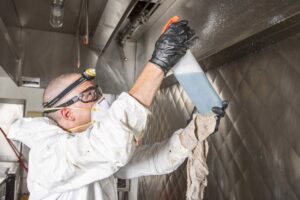
Professional cleaning goes beyond routine wipe-downs. It focuses on removing grease at the source and preventing long-term accumulation.
Professional services typically include:
-
Degreasing behind and under equipment
-
Detailed cleaning of ovens, fryers, and grills
-
Hood and filter cleaning
-
Floor and drain maintenance
Restaurants that work with a restaurant cleaning service in San Diego benefit from consistent grease control that supports safety and compliance.
How Grease Affects Equipment Performance
Grease buildup does not just affect inspections. It also impacts how equipment functions.
Unchecked grease can:
-
Reduce heating efficiency
-
Cause uneven cooking temperatures
-
Increase energy consumption
-
Shorten equipment lifespan
Routine cleaning may improve appearance, but professional cleaning helps maintain performance and reduce long-term maintenance costs.
Why Grease Control Requires a Schedule, Not a Reaction
One of the most common mistakes restaurants make is addressing grease only when it becomes visible or problematic. By that point, buildup is already extensive.
A scheduled cleaning plan:
-
Prevents hard-to-remove buildup
-
Reduces fire and inspection risks
-
Maintains safer working conditions
-
Supports consistent kitchen operations
Proactive grease management is more effective and less costly than reactive cleaning.
Keeping Your Kitchen Safe and Inspection-Ready
A clean kitchen is not defined by what looks good during service. It is defined by what remains clean behind equipment, inside vents, and along floors over time.
Routine cleaning is necessary, but it works best when combined with scheduled deep cleaning and professional degreasing. Restaurants across San Diego rely on experienced commercial cleaners to manage grease buildup before it becomes a safety or compliance issue.
Frequently Asked Questions
Is daily cleaning enough to prevent grease buildup?
No. Daily cleaning helps reduce surface grease, but it does not remove buildup in hard-to-reach areas or ventilation systems.
Why is grease considered a fire hazard?
Grease is highly flammable and can ignite quickly when exposed to high heat, especially inside hood systems.
How often should grease be professionally removed?
Frequency depends on kitchen volume and equipment use, but most restaurants benefit from scheduled professional cleaning.
Can grease buildup cause health inspection violations?
Yes. Grease accumulation is a common reason for inspection citations related to sanitation and safety.